 By Liquido Engineering Team
Key Takeaways
- A Bottle Capping Machine enhances productivity by eliminating the need for repetitive manual capping tasks.
- Automated capping machines support a smooth flow between filling and packaging processes.
- Proper selection of a bottle capping machine is essential for reducing production delays.
- Effective capping machinery minimizes the risk of inconsistent sealing, enhancing product integrity.
- Streamlined capping processes lead to faster production times and improved operational efficiency.
Liquido is a leading manufacturer of bottle capping machines for efficient liquid packaging operations. In a busy production environment, filling bottles quickly is only half the job. Every filled container still needs a cap that is placed and tightened correctly before it moves towards the next packaging stage. When this step becomes slow, the complete line can lose valuable production time.
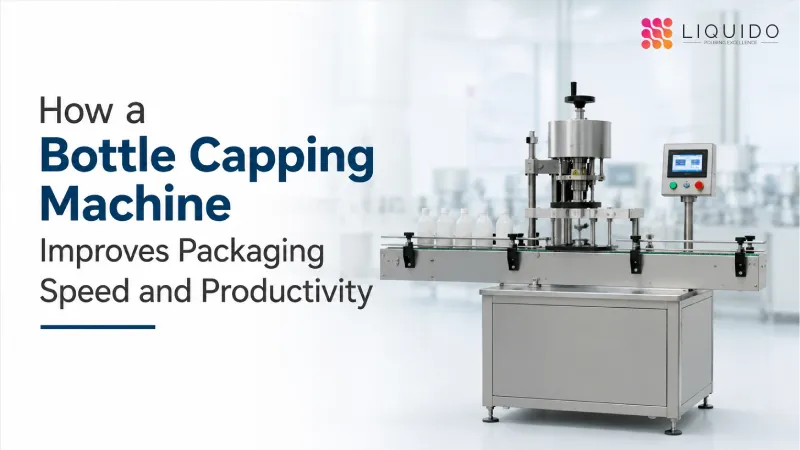
A modern Bottle Capping Machine helps businesses handle this critical packaging stage with better speed, consistency, and control. Instead of depending heavily on repetitive manual capping, manufacturers can create a smoother flow from filling to final packaging. For businesses working with regular or high-volume bottle production, efficient capping is not simply about closing a container. It directly supports packaging productivity.
Why Is Bottle Capping Important in a Packaging Line?
Capping may look like a simple process, but its role in packaging is significant. After a bottle is filled, the closure needs to be handled properly according to the bottle and cap configuration. An inconsistent capping process can interrupt production and increase the need for manual checking.
Manual capping also becomes challenging as production volumes increase. Operators may need to pick caps, position them, and tighten them repeatedly. The speed and consistency of this process can vary throughout a working shift.
A capping machine is designed to bring greater control to this stage. Depending on the machine configuration and packaging requirement, bottles can move through the capping process in a more organised manner.As an experienced Bottle Capping Machine Manufacturer, Liquido focuses on machinery suited to practical packaging requirements and production workflows.
How Does a Bottle Capping Machine Increase Packaging Speed?
The biggest advantage of capping automation is the ability to reduce repetitive manual work. In a manual setup, every bottle may require individual handling. As output increases, capping can become a bottleneck between filling and downstream packaging.
A capping machine helps streamline the process by performing the required capping action in a controlled production sequence. This allows bottles to move through the packaging line with fewer unnecessary pauses.
Here is how it supports faster packaging:
- Reduces repetitive hand capping: Operators do not need to manually tighten every bottle cap.
- Supports continuous bottle movement: The capping stage can work as part of an organised packaging flow.
- Minimises production interruptions: A properly selected machine can reduce delays caused by inconsistent manual capping speed.
- Handles repetitive operations efficiently: The machine performs the capping function consistently during regular production.
- Supports higher production requirements: Automated or semi-automated capping can be useful as packaging demand grows.
The actual operating speed depends on machine design, bottle format, cap type, line configuration, and production requirements. Selecting the right machine is therefore important.
Better Productivity Starts with a Balanced Packaging Line
A packaging line performs well when different stages work together. Filling, capping, labelling, and other processes need to match the overall production flow.Imagine a filling section operating efficiently while bottles wait for manual capping. Even if the filling machine performs well, the delay at the capping stage affects the total packaging output.
This is why a Bottle Capping Machine can make a noticeable difference in production planning. It helps manufacturers create a better balance between bottle filling and closure application.
Liquido understands that productivity is not measured by one machine working quickly in isolation. The complete packaging process needs practical coordination. A suitable capping solution can help reduce a common packaging bottleneck and support a more organised production line.
Consistent Capping Reduces Unnecessary Manual Checking
Manual capping depends heavily on individual operator technique. One operator may tighten a cap differently from another. Fatigue and repetitive work can also affect consistency during longer production periods.
Machine-assisted capping provides a controlled method of handling the closure process. The exact capping mechanism depends on the machine and cap application, but the objective remains consistent operation across repeated production cycles.This can reduce the need to repeatedly check bottles simply because caps were applied manually at different levels of tightness.
For manufacturers evaluating a Bottle Capping Machine Manufacturer in India, it is useful to discuss the actual cap, bottle, and production application before selecting machinery. Machine suitability should be based on packaging requirements rather than choosing equipment only from a general specification.
Reduced Dependency on Repetitive Manual Labour
People remain essential in manufacturing, but repetitive operations can consume valuable working hours. Manual bottle capping is one such task, particularly when hundreds or thousands of containers move through production.
Introducing capping machinery allows operators to focus on monitoring, bottle handling, material availability, quality checks, and other production responsibilities.This does not simply mean replacing manual effort. It means using labour more practically within the packaging operation.
A reliable Bottle Capping Machine Manufacturer should understand how the equipment will fit into the customer's production environment. Factors such as bottle movement, cap handling, available workspace, and existing packaging equipment can influence machine selection.
Supports a More Organised Production Workflow
Production delays are not always caused by major machinery failures. Small process interruptions can gradually reduce output. Bottles waiting for caps, inconsistent manual handling, and frequent pauses can affect the rhythm of a packaging line.Capping machinery brings structure to this stage. Operators can follow a defined production sequence, making the workflow easier to monitor.
A well-planned process can offer practical operational benefits such as:
- Better coordination between filling and capping
- Reduced bottle waiting time
- More predictable production flow
- Easier operator supervision
- Improved planning for regular production batches
The result is a packaging process that feels less dependent on constant manual intervention.
Choosing the Right Bottle Capping Machine Matters
Not all bottles use the same closure. Cap shape, size, material, and application requirements can differ. Additionally, production output and bottle dimensions can differ between businesses.
Before selecting a machine, manufacturers should consider:
Bottle and Cap Compatibility
The bottle and closure combination should be discussed clearly. Sharing actual packaging samples or accurate application details can help in machinery evaluation.
Production Requirement
A business handling limited batches may have different machinery needs from a continuous production unit. The required output should be considered when selecting the machine configuration.
Existing Packaging Setup
The capping equipment may need to work alongside filling or other packaging machinery. Understanding the existing line helps in planning the workflow.
Operator Requirements
Ease of operation and practical handling are important for day-to-day production. The machine should match the working environment and production process.
Future Production Planning
Businesses should also consider whether packaging volumes or bottle formats may change. Discussing future requirements can support better equipment planning.Liquido works with customers to understand their bottle capping applications before discussing suitable machinery.
Why Manufacturers Are Moving Towards Packaging Automation
Modern manufacturers face increasing pressure to manage production time and maintain consistent workflows. Repetitive manual processes can make it difficult to scale packaging operations efficiently.
Automation helps businesses introduce controlled processes at important stages of production. Bottle capping is a logical area for automation because it is repetitive and directly connected with packaging output.
A Bottle Capping Machine can support manufacturers in improving process flow without making the packaging stage unnecessarily complicated. The right level of automation depends on the production requirement.
Businesses searching for a Bottle Capping Machine Manufacturer in India should focus on application understanding, machinery suitability, and technical communication. A capping machine should solve a real packaging challenge and support the intended production process.
How Capping Machinery Supports Business Growth
As a business receives more orders, production pressure increases. A packaging process that worked well for small batches may become difficult to manage at higher volumes.
Adding more people to manual capping may provide temporary support, but it can also increase workspace requirements and process dependency. Machinery offers a structured way to handle repetitive capping operations.With a suitable capping system, manufacturers can plan production more confidently and manage packaging workloads in a systematic manner.
An experienced Bottle Capping Machine Manufacturer can help businesses understand which type of capping setup may match their current application. Clear discussion about bottles, caps, and production requirements is an important part of machine selection.
A Practical Step Towards Faster Packaging
Improving packaging productivity does not always require changing the entire production line. Sometimes, identifying one slow stage can reveal where improvement is needed.
If filled bottles regularly wait for manual capping, the closure process may be restricting the overall packaging flow. Introducing capping machinery can help reduce this delay and create better coordination between production stages.
For companies comparing a Bottle Capping Machine Manufacturer in India, the decision should be based on actual packaging needs. Bottle type, cap application, production flow, and required machine configuration all deserve proper consideration.At Liquido, we focus on understanding the application so customers can discuss machinery according to their production requirements.
Want a free line audit?
Our engineers will benchmark your OEE and identify the top three efficiency gains - in writing, free of cost.
Request Line AuditWhy Choose Us
At Liquido, focuses on practical bottle capping machinery for modern packaging requirements. We understand that every production line can have different bottles, closures, workflows, and output expectations. Before talking about an appropriate capping solution, our method starts with knowing the customer’s application. We value clear technical communication and machinery selection based on actual production needs. Whether a business is improving an existing packaging setup or planning a more organised capping process, Liquido aims to provide dependable machinery guidance. Our focus remains on helping manufacturers improve packaging speed, reduce repetitive capping work, and build a smoother production workflow with suitable equipment.
Conclusion
A bottle capping machine can play an important role in improving packaging speed and overall productivity. By reducing repetitive manual capping, supporting consistent operation, and creating a smoother production flow, the right machinery can help manufacturers manage growing packaging requirements more effectively. Machine selection should always consider bottle type, cap configuration, production needs, and the existing packaging setup. Liquido focuses on understanding these practical requirements before discussing suitable capping machinery. For businesses looking to reduce packaging bottlenecks and organise their production process, investing in the right bottle capping solution can be a valuable step towards efficient operations.
Improve packaging speed and productivity with a suitable bottle capping solution. Call +91 98000 05293 Or Email: info@liquidofill.com to discuss your packaging needs with Liquido.
Bottle Capping Machine Automatic Bottle Capping Machine Bottle Cap Sealing Machine Bottle Capping Machine Manufacturer in India Packaging Machinery Liquid Packaging Equipment Packaging Line Automation Bottle Packaging Industrial Packaging Filling and Capping Machine