 By Liquido Engineering Team
Key Takeaways
- A Semi Automatic Bottle Capping Machine improves packaging productivity by combining operator involvement with machine assistance.
- This equipment reduces repetitive manual capping tasks, enhancing efficiency during production operations.
- Controlled capping processes ensure consistent tightness, minimizing variances caused by manual handling.
- Semi Automatic Bottle Capping Machines are ideal for businesses transitioning from manual to more organized capping systems.
- They integrate seamlessly into existing packaging workflows, making them suitable for diverse production environments.
Liquido is a leading manufacturer of semi automatic bottle capping machines for modern packaging operations. When bottle production starts growing, tightening every cap manually can quickly become a slow and repetitive task. Operators may spend valuable working hours handling bottles and caps, while differences in manual pressure can affect the consistency of the capping process. This is where semi automatic machinery becomes a practical part of a packaging setup.
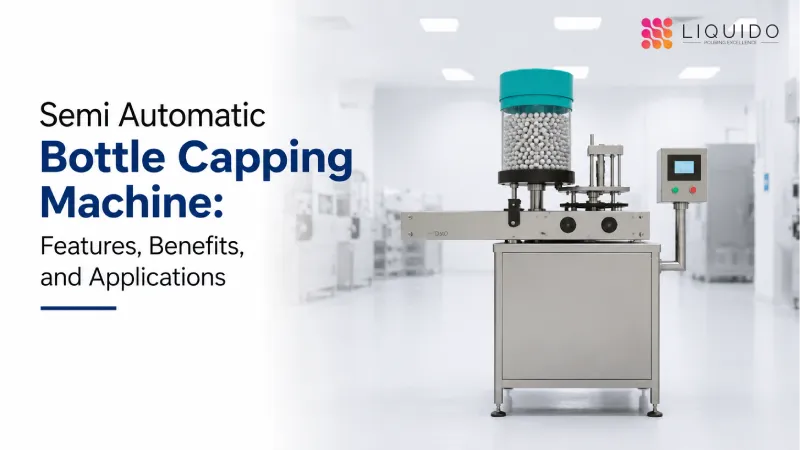
A Semi Automatic Bottle Capping Machine combines operator involvement with machine-assisted capping. It is particularly useful for businesses that need a more organised capping process but may not require a fully automatic packaging line. With controlled operation, practical handling, and suitability for different production environments, this equipment can support smoother day-to-day packaging.
What Is a Semi Automatic Bottle Capping Machine?
A semi automatic bottle capping machine is packaging equipment designed to assist with the application or tightening of bottle caps. Unlike a fully automatic system, some part of the bottle or cap handling process may require operator involvement.
The exact operating method depends on the machine configuration and capping application. An operator may position the bottle, place the cap, or initiate the capping cycle. The machine then performs the designed capping action.
This combination of manual handling and machine operation makes semi automatic equipment suitable for production units looking to reduce repetitive hand capping without immediately moving to complete line automation.As a Semi Automatic Bottle Capping Machine Manufacturer, Liquido focuses on understanding the bottle, closure, and packaging requirement before discussing suitable machinery.
How Does the Machine Work?
The working process of semi automatic capping equipment is generally based on a simple production sequence. The bottle is presented to the capping section, the closure is positioned as required, and the machine carries out the capping operation according to its design.
A typical workflow may include:
- The filled bottle is brought to the capping station.
- The cap is positioned according to the packaging process.
- The bottle is placed correctly in the machine.
- The capping cycle is activated.
- The machine performs the required capping action.
- The capped bottle is removed and moved to the next packaging stage.
The actual operation can vary based on the type of cap and machine. Therefore, manufacturers should discuss their application details before machine selection.
A Semi Automatic Bottle Capping Machine is not simply chosen by looking at bottle capacity. Cap type, bottle dimensions, closure style, and production requirements are equally important.
Key Features of Semi Automatic Bottle Capping Equipment
Semi automatic capping machinery is valued for its practical operation. It offers a middle path between completely manual capping and fully automatic production.
Controlled Capping Process
The machine performs the capping action in a defined operating cycle. This helps bring better process control compared with repetitive manual tightening.
Operator-Friendly Production
Semi automatic systems retain operator involvement. This can be useful in production environments where bottles or caps require individual handling.
Compact Packaging Setup
For units where floor space needs careful planning, a semi automatic machine can be considered as part of a compact packaging arrangement. The actual machine dimensions depend on the selected model and configuration.
Suitable for Batch Production
Businesses handling regular production batches may find semi automatic machinery practical. Operators can manage the capping process according to the production schedule.
Integration with Existing Workflow
The equipment can form part of a packaging setup where filling, capping, and labelling are handled at separate stages.Liquido works to understand how the capping machine will be used within the customer's existing packaging process.
Major Benefits of a Semi Automatic Bottle Capping Machine
The main benefit of semi automatic capping is that it reduces dependency on completely manual cap tightening while keeping the process manageable for the operator.
1. Improves Packaging Productivity
Manual capping can become tiring when operators handle bottle after bottle throughout a production shift. Machine-assisted capping supports a more structured process and can help improve the workflow at the closure stage.
2. Reduces Repetitive Manual Work
Repeated hand tightening requires continuous physical effort. A Semi Automatic Bottle Capping Machine performs the designed capping action, allowing the operator to focus on bottle placement and production handling.
3. Supports Capping Consistency
Manual force can vary between operators and throughout a long working period. A properly selected capping machine provides a controlled machine-assisted process for repeated capping cycles.
4. Creates an Organised Workflow
The operator follows a defined sequence for each bottle. This makes the capping station easier to manage during regular production.
5. Practical Step Towards Packaging Automation
Businesses do not always need to automate an entire packaging line at once. Semi automatic capping machinery can be a practical step for units moving away from manual packaging processes.
A reliable Semi Automatic Bottle Capping Machine Manufacturer should discuss the production application carefully before recommending equipment.
Where Is a Semi Automatic Bottle Capping Machine Used?
Bottle capping is required across many industries where liquid or suitable products are packed in containers with compatible closures. The exact machinery requirement depends on the bottle and cap application.
Semi automatic capping equipment may be considered for packaging operations in areas such as:
- Food and beverage packaging
- Cosmetic and personal care packaging
- Pharmaceutical packaging operations
- Chemical product packaging
- Lubricant packaging
- Household product packaging
- Liquid filling and packaging units
This list represents general packaging applications. Machine suitability should always be checked according to the actual product container, closure, and operating environment.At Liquido, we encourage customers to share clear bottle and cap details while discussing their capping requirements.
Why Cap and Bottle Compatibility Matters
One common mistake in machinery selection is focusing only on production output. A capping machine must also suit the bottle and closure combination.
Bottle height, bottle shape, cap size, cap design, and closure application can influence the capping process. A machine designed for one capping requirement may not automatically work for every bottle or cap.
Before choosing machinery, manufacturers should consider a few practical questions:
- What type of bottle is being used?
- What are the bottle dimensions?
- Which closure or cap is applied?
- How is the cap currently placed?
- What is the required production volume?
- Is the packaging format likely to change?
Discussing these details with a Semi Automatic Bottle Capping Machine Manufacturer helps create a clearer understanding of the application.
Semi Automatic vs Manual Capping
Manual capping may work for very small production quantities. The operator places and tightens every cap by hand. As bottle volume grows, the process can become repetitive and may slow down the packaging stage.
Semi automatic capping introduces machinery into the closure process while retaining operator control over selected tasks. The machine assists with the actual capping action according to its design.
The key difference lies in process structure. Manual capping depends almost entirely on operator effort, while semi automatic capping creates a defined machine-assisted cycle.For growing packaging units, this difference can support better productivity without making the production process unnecessarily complex.
Semi Automatic vs Fully Automatic Capping
A fully automatic capping system is generally designed for a more automated production flow. Depending on the equipment configuration, bottles move through the capping section with less manual involvement.
A semi automatic system requires operator participation during the capping process. This makes it suitable for businesses with different production requirements, batch-based operations, or packaging setups where full automation is not currently required.
Neither option is automatically better for every business. The right choice depends on production output, bottle handling, cap application, available setup, and packaging workflow.A Semi Automatic Bottle Capping Machine Manufacturer can help discuss these factors from an equipment application perspective.
How Does Semi Automatic Capping Improve Productivity?
Packaging productivity depends on how smoothly each process stage operates. Even an efficient filling operation can face delays if bottle capping remains completely manual and slow.
Semi automatic capping helps create a repeatable working sequence. The operator positions the bottle or cap as required, and the machine performs the capping action. The completed bottle can then move towards labelling, inspection, or another packaging stage.This structured movement reduces unnecessary handling and helps operators develop a consistent production rhythm.
The benefit becomes more noticeable when capping is a regular part of daily production. Instead of relying entirely on hand tightening, businesses can use machinery to support the repetitive operation.
Factors to Consider Before Selecting a Machine
Choosing capping machinery requires practical planning. A machine should match the current production process and actual packaging application.
Consider these important factors:
Production Requirement
Understand the expected bottle volume and daily packaging workload.
Cap Type
Provide clear details about the closure used for the product.
Bottle Format
Bottle dimensions and shape should be considered during equipment discussion.
Available Workspace
Plan where the machine will be installed and how operators will handle bottles around the equipment.
Existing Packaging Machinery
If filling or labelling equipment is already used, consider how capping will fit into the complete workflow.
Future Requirements
Discuss expected changes in production or packaging formats where relevant.Liquido focuses on application-based machinery discussions so customers can consider capping equipment according to practical production needs.
Want a free line audit?
Our engineers will benchmark your OEE and identify the top three efficiency gains - in writing, free of cost.
Request Line AuditWhy Choose Us
At Liquido, provides bottle capping machinery with a focus on practical packaging requirements and clear application understanding. We know that businesses may use different bottles, caps, production volumes, and packaging workflows. Our approach starts with understanding these details before discussing a suitable machine. As manufacturers move from manual processes towards more organised packaging, we aim to support them with practical machinery solutions and clear technical communication. Liquido values efficient machine selection based on real production requirements. From bottle and cap discussions to capping workflow planning, we focus on helping customers choose equipment that supports smoother and more productive packaging operations.
Conclusion
A semi automatic bottle capping machine offers a practical way to improve bottle packaging without moving directly from manual work to complete automation. Its machine-assisted capping process can reduce repetitive hand tightening, support consistent operations, and create a more organised packaging workflow. The right equipment should be selected according to bottle dimensions, cap type, production needs, and the existing packaging setup. Liquido focuses on understanding these application details before discussing suitable machinery. For businesses managing regular bottle production, semi automatic capping equipment can be a valuable addition that supports productivity, operator convenience, and better coordination across the packaging process.
Improve your packaging process with a reliable semi automatic bottle capping solution. Call +91 98000 05293 Or Email: info@liquidofill.com to discuss your packaging needs with Liquido.
Semi Automatic Bottle Capping Machine Bottle Capping Equipment Capping Machine Packaging Machinery Bottle Packaging Cap Sealing Machine Semi Automatic Packaging Liquid Packaging Machine Industrial Capping Machine Bottle Closure Equipment