 By Liquido Engineering Team
Key Takeaways
- A Fully Automatic Bottle Capping Machine ensures continuous production flow and reduces delays in high-speed operations.
- Automating the capping process minimizes manual intervention, freeing operators for more valuable tasks like supervision.
- Controlled torque in automatic capping systems ensures consistent cap tightness, reducing packaging errors and improving quality.
- Synchronization of conveyor and cap feeding enhances workflow efficiency, preventing bottlenecks during production.
- Choosing the right fully automatic capping machine involves understanding your specific bottle and closure requirements.
Liquido is a leading manufacturer of fully automatic bottle capping machines for high-speed packaging production. When hundreds or thousands of bottles move through a production line, even a small delay at the capping stage can disturb the complete workflow. Filled bottles begin to queue, operators face pressure to handle closures faster, and the production line loses its natural rhythm.
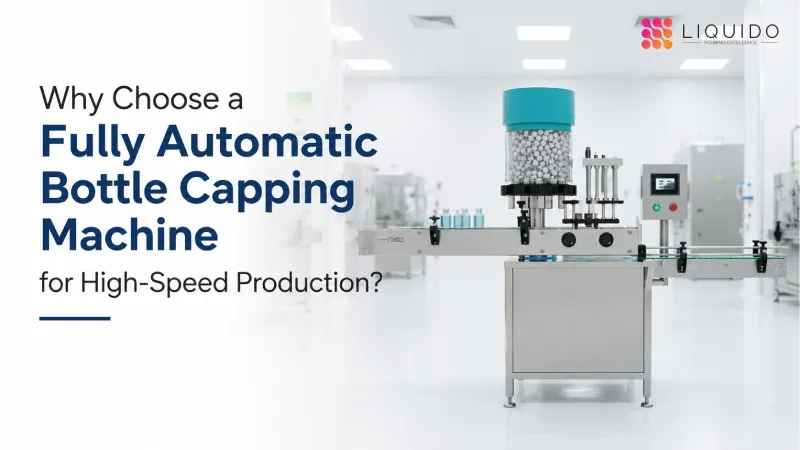
A Fully Automatic Bottle Capping Machine is designed to automate the bottle closure process for continuous production. Liquido's automatic capping systems are developed for high-speed operation with controlled torque and integration into filling and packaging lines. For manufacturers aiming to increase output while reducing repetitive cap handling, automatic capping can become a vital part of production planning.
What Is a Fully Automatic Bottle Capping Machine?
A fully automatic capping machine is packaging equipment designed to apply and tighten bottle closures with minimal manual involvement during regular operation. Bottles move through the machine using a conveyor-based production flow, while the cap feeding and capping mechanisms work in coordination with bottle movement.
Depending on the capping system and closure application, caps are supplied to the capping section, positioned for application, and tightened through the machine's capping mechanism.The purpose is simple: maintain a continuous capping process that matches the needs of a high-speed production line.
Liquido manufactures fully automatic capping equipment for various closure applications. Selecting the correct machine depends on the bottle, cap, torque requirements, and expected production output.
Why Does High-Speed Production Need Automatic Capping?
A production line is only as efficient as its slowest process. A fast filling machine may complete its operation quickly, but if bottles wait for manual capping, the complete line cannot maintain the intended output.
This is where a Fully Automatic Bottle Capping Machine becomes valuable. It helps manufacturers automate a repetitive closure process and maintain continuous bottle movement.
Automatic capping can support high-speed production in several ways:
- Continuous bottle flow: Bottles move through the capping section as part of the packaging line.
- Reduced manual cap tightening: Operators are not required to manually tighten every individual cap.
- Controlled capping operation: Adjustable torque control can support consistent closure application for compatible bottles and caps.
- Better line coordination: Capping machinery can work as part of a filling and packaging setup.
- Support for growing production: High-speed capping automation can help manufacturers manage increased packaging requirements.
The machine configuration should always be selected according to the actual production application.
Faster Capping Means a Smoother Packaging Workflow
Speed is important in manufacturing, but uncontrolled speed can create new problems. A packaging line needs coordination between filling, capping, labelling, inspection, and collection.
When the capping process operates at a suitable speed for the upstream filling line, bottles can move more smoothly through production. This reduces unnecessary accumulation between packaging stages.
A reliable Fully Automatic Bottle Capping Machine Manufacturer in India should consider the wider packaging process rather than looking at the capping machine in isolation.
Liquido focuses on bottle capping systems designed for integration with filling and packaging lines. We understand that production efficiency comes from the way different machines work together within the complete workflow.
Controlled Torque Supports Consistent Cap Tightening
One of the practical challenges in bottle capping is maintaining appropriate closure tightness. A loose cap may not provide the intended closure, while unsuitable capping force can create packaging problems.
Automatic capping equipment can use controlled torque settings according to the capping system. Liquido's bottle capping range includes adjustable torque control for consistent cap tightening across repeated production cycles.This controlled process reduces dependency on individual operator hand pressure.
However, torque requirements differ according to the bottle and cap combination. The closure type, cap material, bottle neck, and packaging application should be evaluated before finalising the machinery.This is why manufacturers should share actual bottle and cap details during machine discussions.
Less Repetitive Manual Work on High-Volume Lines
Manual capping may be manageable for limited production, but the situation changes when bottle output increases. Repeated cap placement and tightening can become physically tiring and difficult to maintain at high speed.
Automatic capping reduces manual involvement in repetitive closure handling during regular production. Operators can focus more on machine supervision, material availability, production monitoring, and quality checks.The objective is not simply to remove people from the process. It is to use operator time more effectively.
For high-volume manufacturers, a Fully Automatic Bottle Capping Machine can bring structure to a process that would otherwise require continuous repetitive labour.
Cap Feeding and Conveyor Synchronisation Matter
A fully automatic capping machine does more than tighten a cap. The movement of bottles and the supply of closures need to work in coordination.
Liquido's fully automatic capping systems are designed for continuous production lines with synchronised conveyor and cap feeding mechanisms. The exact machine arrangement depends on the selected capping application.
The production sequence typically involves bottle movement through the conveyor, closure supply, cap positioning, capping, and transfer towards the next packaging stage.When these actions are properly coordinated, the capping process becomes part of a continuous production workflow.
A Fully Automatic Bottle Capping Machine Manufacturer in India should understand bottle movement and closure handling when discussing high-speed machinery.
Suitable for Different Bottle Packaging Industries
Automatic bottle capping is required across industries that use containers and compatible closures for product packaging. The exact machine design should match the specific application.
Fully automatic capping equipment may be used in packaging operations for:
- Pharmaceutical products
- Food and beverage products
- Cosmetics and personal care products
- Chemical liquids
- Lubricants
- Household products
- Other compatible liquid packaging applications
Liquido manufactures packaging machinery for pharmaceutical, food and beverage, cosmetic, chemical, and lubricant manufacturing requirements.Machine suitability still depends on the actual bottle, closure, and production conditions. Industry type alone should not be used to select a capping machine.
Different Caps Need the Right Capping Technology
Not every cap is applied in the same way. Screw caps, ROPP aluminium caps, press-on caps, snap caps, child-resistant closures, trigger sprayers, and lotion pumps can have different handling and capping requirements.
Liquido's capping machine range covers multiple closure applications, including screw, ROPP, press-on, snap, CRC, trigger spray, and pump caps.The correct capping technology should follow the closure application. Manufacturers should not select a machine first and then try to make the cap fit the equipment.
Before discussing machinery, provide details such as:
- Bottle shape and dimensions
- Bottle neck configuration
- Cap type and size
- Required closure application
- Current production output
- Expected packaging speed
- Existing filling or labelling equipment
These details help a Fully Automatic Bottle Capping Machine Manufacturer in India understand the actual production requirement.
Better Coordination with Filling and Labelling Machines
High-speed packaging frequently requires the cooperation of several machines.Bottles may move from filling to capping and then towards labelling, coding, inspection, or collection.
If the capping machine is not suitable for the line speed, bottle accumulation or production interruptions may occur.Automatic capping equipment should therefore be selected with upstream and downstream machinery in mind. The expected bottle flow needs practical consideration during line planning.
Liquido develops filling, capping, and labelling machinery, which allows us to understand the relationship between these important packaging stages. Our focus is on discussing capping equipment as part of the customer's actual production workflow.
How Automatic Capping Supports Production Growth
Growing businesses often reach a stage where manual or semi automatic packaging can no longer comfortably handle production requirements. More orders mean more bottles, more closures, and greater pressure on the packaging team.
A fully automatic system provides a structured approach to high-volume capping. Continuous bottle movement and machine-controlled closure application can support increased production requirements.
Automatic machinery can also make production planning more predictable. Manufacturers can evaluate line requirements and organise the packaging process around defined machine capabilities.This makes automatic capping particularly relevant for businesses expanding their packaging operations or developing continuous production lines.
What to Consider Before Choosing a Fully Automatic Capping Machine
Buying automatic packaging equipment requires more than asking about machine speed. The machine should match the real production application.
Production Output
Discuss current and expected bottle production requirements. The capping section should be planned according to the wider line.
Bottle and Cap Samples
Actual samples can provide useful application details when discussing machinery.
Closure Type
Identify whether the packaging uses screw, ROPP, snap, press-on, or another compatible closure.
Torque Requirement
Suitable capping control depends on the closure and bottle combination.
Existing Packaging Line
Share details about filling, conveyor, labelling, and other equipment that may interact with the capping machine.
Future Packaging Plans
If bottle formats or production volumes may change, discuss these requirements during machinery planning.The right equipment decision begins with a clear understanding of the application rather than choosing machinery only from a general catalogue.
Want a free line audit?
Our engineers will benchmark your OEE and identify the top three efficiency gains - in writing, free of cost.
Request Line AuditWhy Choose Us
At Liquido, provides automatic bottle capping machinery with a strong focus on application understanding and practical packaging requirements. We work with bottle, cap, torque, and production details to discuss suitable capping configurations for modern manufacturing lines. Our experience across filling, capping, and labelling equipment helps us understand how machinery needs to coordinate within a complete packaging process. As manufacturers move towards faster production, we focus on clear technical communication and machinery selection based on actual operational needs. Liquido aims to support businesses with efficient capping solutions that reduce repetitive handling, improve production flow, and fit their high-speed packaging objectives.
Conclusion
A fully automatic bottle capping machine is a practical choice for manufacturers aiming to improve capping speed, maintain continuous bottle movement, and reduce repetitive manual closure handling. Controlled capping, conveyor-based operation, cap feeding, and packaging line coordination can support efficient high-volume production. However, the right machine should always match the bottle, closure type, torque requirement, and wider production setup. Liquido focuses on understanding these application details before discussing suitable machinery. For manufacturers planning high-speed packaging operations, selecting an appropriate automatic capping system can create a smoother workflow and support growing production requirements with better process control.
Upgrade high-speed production with a fully automatic bottle capping solution. Call +91 98000 05293 Or Email: info@liquidofill.com to discuss your packaging needs with Liquido.
Fully Automatic Bottle Capping Machine Automatic Capping Machine Bottle Capping Equipment High-Speed Packaging Packaging Automation Bottle Sealing Machine Capping System Industrial Packaging Machine Automatic Packaging Line Bottle Capping Manufacturer